
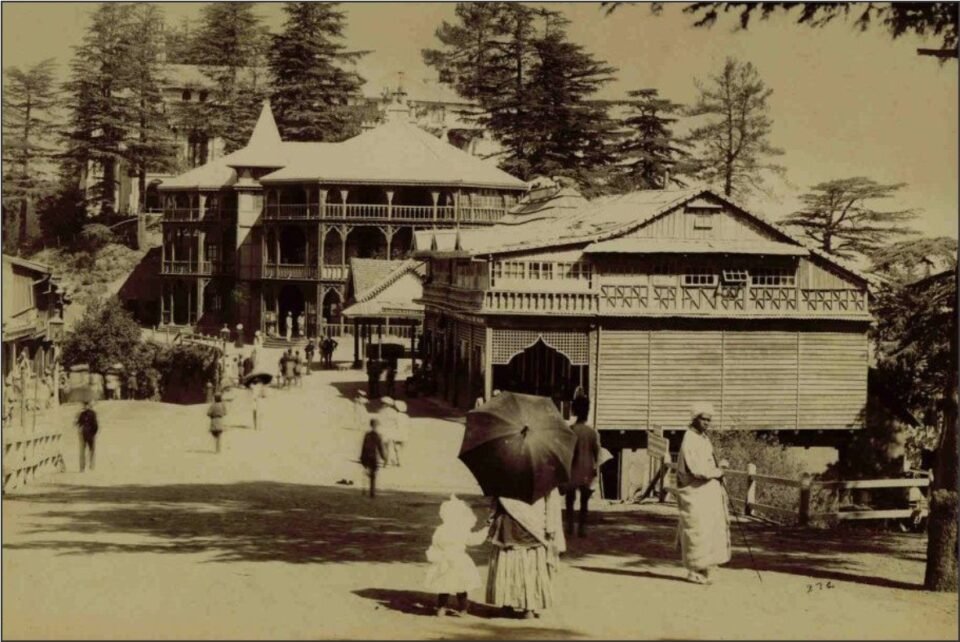
Sitting in the lap of the Himalayas, Shimla is one of India’s most famous hill stations. The history of Shimla is just as breathtaking as its cool weather, friendly people, and beautiful scenery. From dense forests and sacred Devdwar trees to becoming the summer capital of British India, Shimla has gone through remarkable changes over the years.
How Shimla Began: The Complete Origin Story
A long time ago, when the British first discovered it, Shimla was a thick forest area with beautiful landscapes, and it was home to the Pahari tribes. The area had small villages and was also the place where the temple of Goddess Shyamala was built. The name Shimla is believed to come from the name of this goddess.
Shimla’s Place Among the Princely Hill States
Shimla is part of the Keonthal region, a small hill area. The British were drawn to it because of its location and amazing views.
After 1815: The British “Discovery” of Shimla
Shimla was marked on the British map after the Gurkha War (1814–1816). This gave Shimla a lot of attention in the heart of the British Empire. British officials started to visit the place for rest and recreation.
Early Agreement
The first British home, called the “Kennedy residence,” was built in 1822 by Captain Charles Kennedy. This was the beginning of the British changes in Shimla over the years.
The Summer Capital: How Shimla Grew and Expanded
In the middle of the nineteenth century, Shimla became the British favorite place to escape the heat of the plains.The city grew quickly with the construction of grand homes, churches, and big walking paths.
Authentic Summer Capital: Shimla’s Golden Age
In 1864, Shimla became the summer capital of British India. For almost a hundred years, it was the temporary seat of the government. During the summer, the Viceroy, top officers, and government departments moved to Shimla, making it a center for political decisions.
Architectural Legacy: Shimla’s Colonial Buildings
Shimla’s most famous buildings, such as the Viceregal Lodge, Christ Church, and Gorton Fort, were built during this time. Their unique and striking designs were made by the British Empire.
Independent Shimla: Growth as the State Capital
After India gained independence in 1947, Shimla kept its important role in government. In 1971, when Himachal Pradesh became a full state, Shimla was chosen as its capital.
Modern Shimla: Today’s Ultimate Hill Destination
Today, Shimla is a mix of history and modern life. Its yearly tourism, busy Mall Road, and educational institutions like the Indian Institute of Technology keep the city lively.
End:
The history of Shimla is a journey from a quiet Himalayan hill to a powerful colonial capital and then to a modern tourist hotspot.
Its rich history, layered past, and architectural beauty continue to attract visitors and historians. Shimla’s story is not just about a hill town—it’s a reflection of India’s cultural and political story over the centuries.
Disclaimer: The information provided in this article is for general knowledge only. Historical interpretations may vary, and the content should not be considered an official historical record.
